










PADI Divemaster Course Koh Tao
Course Price: 38,000 THB
BOOK ONLINEPADI Divemaster Pro Level Diving Course
Learn to become a role model PADI Divemaster in Thailand
Black Turtle Dive dive centre in collaboration with IDC Koh Tao pro level training team, provide suitable Divemaster candidates with a structured, effective and rewarding PADI Divemaster course.
Our PADI Diving Course training is not designed to tick boxes, instead we focus on the needs of individual candidates leading to our recognized and award-winning diver training program that produces better scuba divers.
Do you have a passion for scuba diving and the underwater world? Do you want to share this love for scuba diving with others? Would you like to take this to a whole new level?
If so, sign up now for the PADI Divemaster course Koh Tao and start an adventure of a lifetime. Do something you love as a career – book our Award Winning Koh Tao Divemaster course in Thailand.
- Flexible and personalised scheduling system tailored to YOU!
- Dedicated team of PADI Master Instructors and Course Directors
- Free optional working Internship Program
- Divemaster Discount – Great discounts off equipment purchased through us
PADI Divemasters are role models other scuba divers look up to. This is because they are leaders who mentor and motivate others. As a Divemaster on Koh Tao, you not only get to dive a lot, but also experience the joy of seeing others have as much fun diving as you do.
Who Can Enrol on the PADI Divemaster Course?
- Be certified as a PADI Advanced Open Water Diver and PADI Rescue Diver or equivalent
- Be 18 year old
- Have 40 logged dives to start course
- Complete EFR Primary & Secondary Care training or other recognised First Aid course within 2 years
- A medical statement signed by a physician within the last 12 months
Koh Tao Divemaster Course – what you learn
Understanding the Role & Characteristics of a PADI Divemaster
Divemaster Orientation
The first thing you will do during PADI Divemaster training is your Orientation with our Divemaster Coordinators.
During your orientation we will go through your personal goals and timeline for the course and come up with a dedicated plan for your professional development.
We will also introduce you to the PADI Divemaster course breakdown and what you can expect during your training.
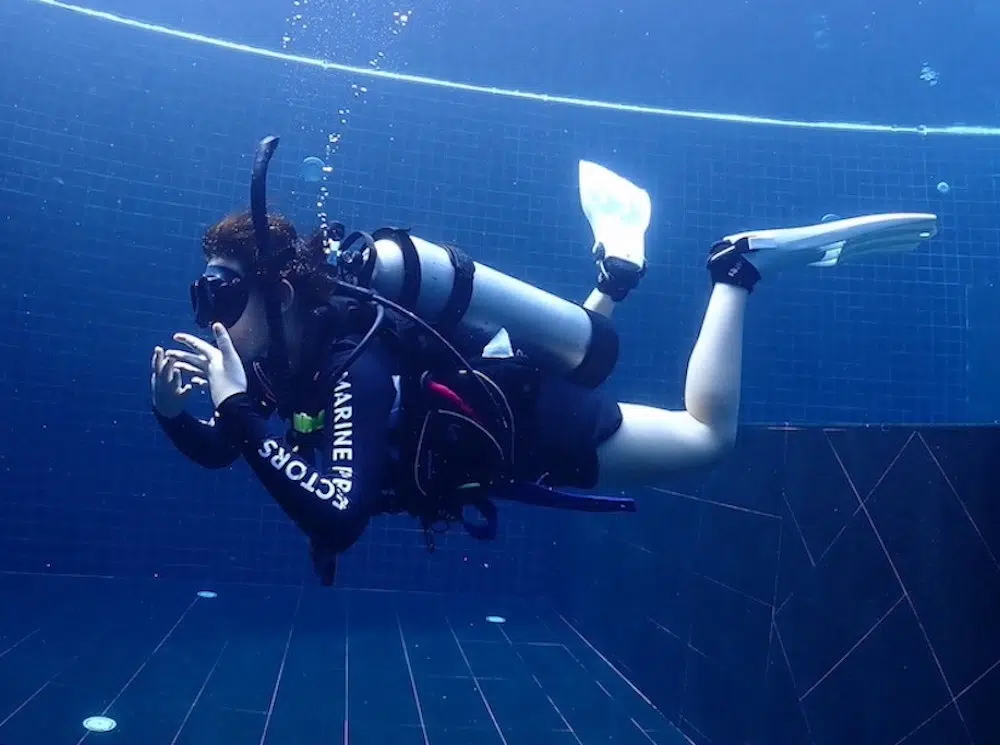
Practice Neutral Buoyancy Skills as a PADI Divemaster
Divemaster Knowledge Development
As part of the Divemaster course you will need to complete 9 knowledge development segments, via the Divemaster eLearning. This gives you the flexibility to be able to complete prior to arriving and maximize your time underwater.
Once you have completed your Knowledge Development, Our Dedicated Divemaster coordinators will review and remediate with you on any questions you answered in-correctly.
They will also review how to properly use the PADI RDP and eRDPml dive tables with you.
At this point you will need to pass your Divemaster exam. The exam is broken into two sections and you will need to attain 75% in both areas in order to achieve mastery.
At some point during your training, you will be asked to create an Emergency Assistance Plan for a designated dive site.
*You may use your Emergency Assistance plan from your PADI Rescue Diver Course.
Divemaster Course Practical Application Skills
Skill 1 — Dive Site Setup and Management
In this section you will learn how set up a dive site and manage predive preparation.
When you first begin your PADI Divemaster training, you will have the opportunity to shadow our Divemaster Team and witness the behind the scenes logistics of a working dive center.
Once you have an idea of the day to day preparation that goes into operating a dive trip, we will put your skills to the test. A few of the tasks that you will be completing will be:
- Preparing emergency equipment
- Greeting divers & organizing a dive roster
- Monitoring a dive from an appropriate vantage point and assisting divers both before and after their dive
Skill 2 — Mapping Project
The mapping project is one of the most valuable and practical components of the PADI Divemaster course, giving you a deeper understanding of how dive sites are structured, navigated, and managed. Rather than simply following a guide, you’ll take on the role of a dive professional—learning how to observe, record, and interpret an underwater environment in a way that directly supports real-world dive operations.
During the project, you’ll plan and conduct a series of dives to create a detailed map of a chosen dive site. This includes identifying key features such as depth contours, navigation routes, entry and exit points, hazards, and points of interest. You’ll also record distances, bearings, and natural references, developing your underwater navigation skills using both compass work and natural navigation techniques. By the end of the project, you’ll have produced a clear, accurate map that could be used to brief certified divers or assist in guiding dives.
Beyond navigation, the mapping project teaches you how to think like a Divemaster. You’ll learn how to assess a dive site from a safety and logistical perspective—considering factors such as current, visibility, boat traffic, and diver flow. This helps you understand how to plan dives more effectively, manage groups, and adapt to changing conditions. It also builds your situational awareness, a key skill for any dive professional responsible for leading and supervising others underwater.
Another important aspect of the project is communication. Once your map is complete, you’ll use it to deliver detailed dive briefings, helping other divers visualise the site before entering the water. This improves your ability to explain routes, highlight key features, and clearly communicate safety considerations—skills that are essential when working as a professional in a busy dive environment.
Ultimately, the mapping project bridges the gap between being a recreational diver and becoming a dive leader. It develops your navigation, observation, planning, and communication skills in a practical and engaging way, giving you the confidence to guide dives, assist instructors, and operate effectively as a PADI Divemaster.
Skill 3 — Dive Briefing
The dive briefing is a core skill developed during the PADI Divemaster course and one that you will use every day as a dive professional. A clear, structured, and engaging briefing sets the tone for the entire dive, ensuring that all divers understand the plan, feel confident, and are prepared for the conditions they are about to experience.
During your training, you’ll learn how to deliver professional-level dive briefings that are both informative and easy to follow. This includes covering essential elements such as the dive site overview, entry and exit procedures, maximum depth and time limits, navigation plan, communication signals, buddy procedures, and safety considerations. You’ll also learn how to tailor your briefing depending on the group—whether you are guiding newly certified divers or experienced individuals—ensuring the information is always relevant and effective.
A key focus of the dive briefing skill is structure and clarity. You will be taught how to organise your briefings in a logical flow so that divers can easily understand and retain the information. This includes using visual references, clear language, and confident delivery to build trust and authority as a dive leader. Over time, you’ll refine your ability to present information in a calm, professional manner that reassures divers and enhances their overall experience.
Another important aspect is situational awareness. You’ll learn how to incorporate real-time conditions into your briefing, such as current, visibility, weather, and any potential hazards. This ensures that your dive plan is not only clear but also adaptable, helping you prepare divers for what they may encounter underwater. This ability to assess and communicate changing conditions is a critical skill for managing safe and enjoyable dives.
The dive briefing also plays a major role in your development as a leader. It’s your opportunity to establish control of the group, set expectations, and create a positive, organised environment before the dive even begins. As you practice and receive feedback, you’ll develop your own delivery style—one that is confident, professional, and engaging.
Ultimately, mastering the dive briefing skill is about more than just sharing information. It’s about communication, leadership, and responsibility. By the end of your Divemaster course, you’ll be able to deliver clear, effective briefings that enhance safety, improve diver confidence, and contribute to a smooth and enjoyable dive experience for everyone involved.
Skill 4 — Search and Recovery Scenario
The search and recovery scenario is one of the most practical and engaging parts of the PADI Divemaster course, designed to develop your problem-solving skills, underwater navigation, and ability to manage real dive situations. As a dive professional, losing an item underwater or assisting divers in locating equipment is a common occurrence, and this training prepares you to handle it confidently and efficiently.
During this scenario, you’ll learn how to plan and execute a variety of search patterns, including expanding square, circular, and U-pattern searches. You’ll use both compass navigation and natural references to ensure accuracy, while also managing depth, time, and air consumption. These are essential skills that translate directly into real-world diving, where conditions are not always predictable.
Once an object is located, you’ll practice safe and controlled recovery techniques. This includes learning how to properly rig and use lift bags to bring items to the surface without causing damage or risking safety. You’ll also develop teamwork and communication skills, working closely with your buddy or team to complete the task efficiently.
Beyond the technical skills, this scenario builds confidence. It teaches you how to remain calm under pressure, think clearly, and adapt your plan when needed—qualities that define a strong dive professional. By the end of the exercise, you’ll not only understand how to conduct a search and recovery operation, but you’ll also feel capable of leading one.
For many candidates, this is one of the most rewarding parts of the course, combining challenge, skill development, and real-world application into a highly valuable experience that prepares you for working as a professional diver anywhere in the world.
*This skill can also be completed by holding the PADI Search & Recovery Specialty.
Skill 5 — Deep Dive Scenario
The deep dive scenario is an essential part of your development as a PADI Divemaster, giving you the skills and confidence to safely plan, organise, and supervise dives at greater depths. As a dive professional, understanding how depth affects both divers and dive planning is critical, and this training ensures you are fully prepared to manage those challenges.
During this scenario, you’ll learn how to plan a deep dive in detail, including setting appropriate depth and time limits, managing descent and ascent rates, and closely monitoring no-decompression limits. You’ll also develop a strong awareness of increased air consumption and how to manage it effectively for both yourself and the divers you are supervising.
A key focus is recognising and responding to the effects of depth, such as nitrogen narcosis and changes in diver behaviour. You’ll practice identifying early signs, maintaining close supervision, and ensuring that all divers remain safe, comfortable, and within limits. This level of awareness is what separates a recreational diver from a true dive professional.
You’ll also refine your buoyancy control and positioning at depth, ensuring you can maintain stability while observing and assisting others. Clear communication and strong leadership are emphasised throughout, helping you guide divers confidently in a deeper environment.
By the end of the deep dive scenario, you’ll feel comfortable operating at depth and managing the additional responsibilities that come with it. This experience not only builds your confidence but also prepares you for real-world diving situations, making you a safer, more capable, and more employable dive professional.
*This skill can also be completed by holding the PADI Deep Diver Specialty
Divemaster Conducted Program Workshops
Workshop 1: ReActivate Program
The ReActivate Workshop is broken into three segments:
- Standards & knowledge assessment review
- ReActivate interview role play
- ReActivate waterskills session & briefing workshop
During this workshop you will review exactly how to conduct the ReActivate program as a PADI Divemaster.
You will go through the entire program from start to finish, while role playing as both the student and the Divemaster.
We will also focus on time-management, in water positioning, problem solving and effective debriefs.
Materials used during the Workshop:
- Standards & knowledge assessment review
- ReActivate interview role play
- ReActivate waterskills session & briefing workshop
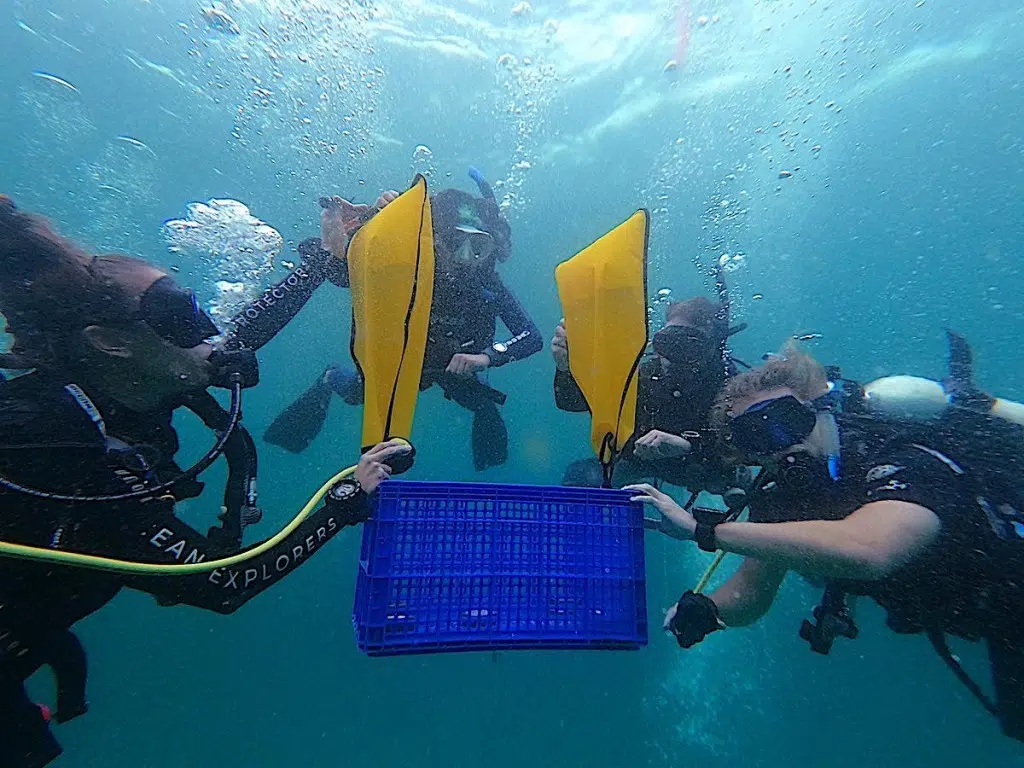
Workshop 2: Advanced Snorkeler Course and Snorkeling Supervision:
The Advanced Snorkeler Workshop is broken into two segments:
- Standards & knowledge assessment review
- Skin Diver waterskills session & Briefing workshop
During this workshop you will review exactly how to conduct an Advanced Snorkeler program as a PADI Divemaster.
You will go through the entire program from start to finish, while role playing as both the student and the Divemaster.
During the workshop your coordinators will highlight differences between a scuba diving briefing and a skin dive/snorkel tour briefing.
They will also focus on problem solving and supervision techniques for both confined and open water dives.
Materials used during the Workshop:
- Advanced Snorkeler aquatic cue card
- PADI Instructor Manual
- Release of Liability/Assumption of Risk/Non-agency Acknowledgement Form Discover Snorkeling and Skin Diving
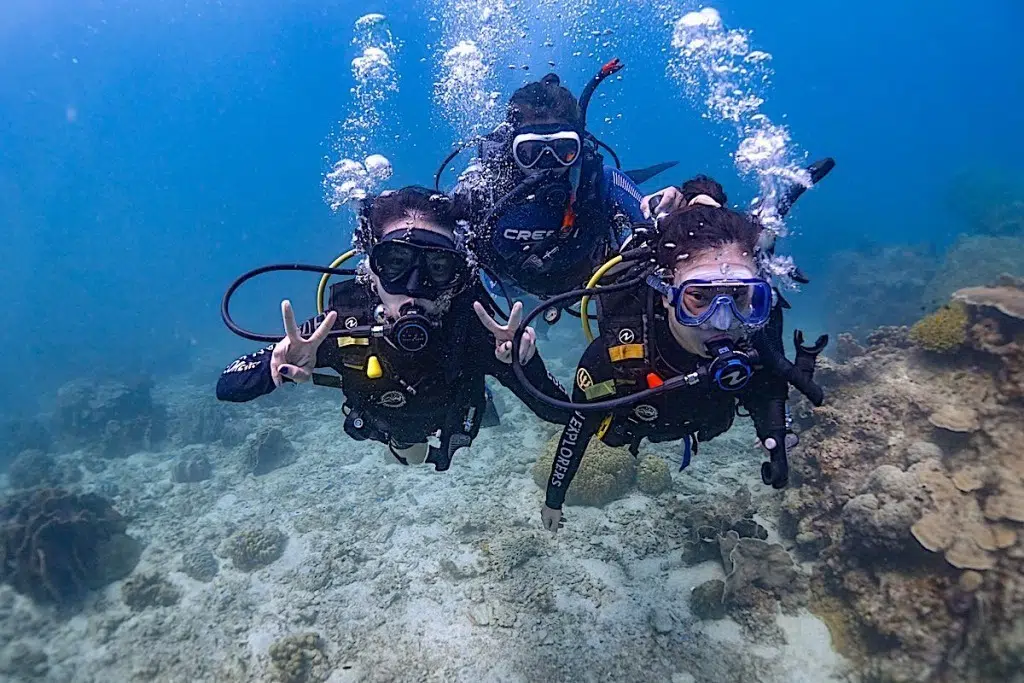
Workshop 3: Discover Scuba Diving Program
Confined Water:
The Discover Scuba Diving Workshop in Confined Water is broken into three segments:
- Program standards & Discover Scuba Diving Leader internship requirements review
- Discover Scuba Diving briefing and Knowledge review using the PADI Discover Scuba Diving Participant Guide
- Discover Scuba Diving Confined water session
During this workshop you will review exactly how to assist the Discover Scuba Diver program as a certified assistant.
You will go through the entire program from start to finish, while role playing as the participant, instructor and the PADI certified assistant.
During the workshop your coordinators will focus on positioning, supervision and problem solving during this experience program.
Materials used during the Workshop:
- Discover Scuba Diving aquatic cue card
- PADI Instructor Manual
- PADI Discover Scuba Diving Participant Guide
- PADI DIVEMASTER Discover Scuba Diving Internship Completion Form
Workshop 4: Discover Scuba Diving Program
Additional Open Water Dive:
The Discover Scuba Diving Workshop in Open Water is a follow up to the Discover Scuba Diving Workshop in Confined Water.
Your Divemaster coordinators will build on the skills and standards you have previously learned, whilst applying them to a more challenging environment.
In Open Water we will focus on control and proper supervision techniques for leading uncertified divers during an additional Open Water Dive.
PADI INSTRUCTOR MANUAL
Workshop 5: Discover Local Diving in Open Water:
The Discover Local Diving Workshop in Open Water is broken into three segments:
- Program standards review
- Discover Local Diving Briefing
- Leading a dive & deploying a surface marker.
During this workshop you will review exactly how to conduct a Discover Local Diving (DLD) experience program as a PADI Divemaster.
You will go through the entire program from start to finish, while role playing as either the PADI Divemaster or a certified diver.
During the workshop your coordinators will help you plan, brief and lead a dive based on a scenario that you will be given.
Throughout the dive you will be expected to solve problems and supervise the group as necessary. We will finish the dive with a surface marker deployment workshop.
Materials used during the Workshop:
- Discover local diving aquatic cue card
- PADI Instructor Manual
- Local Koh Tao Dive Site Guide
- PADI Release of Liability/Assumption of Risk/Non-agency Acknowledgment Form Certified Diver Experience Programs
Divemaster Waterskills Development
Waterskills exercises:
Throughout your Divemaster program you will need to complete five waterskills exercises, earning a combined score of at least 15. These exercises consist of:
- Exercise 1: 400 Metre Swim
- Exercise 2: 15-minute Tread
- Exercise 3: 800 Metre Snorkel Swim
- Exercise 4: 100 Metre Diver Tired Diver Tow
- Exercise 5: Equipment Exchange
These exercises can be completed at any time during your training with any one of our PADI Instructors.
You do not need to complete them in one go and you can participate in multiple attempts if needed. There is no passing score for any other single exercise, other than the equipment exchange.
Our staff members will review the scoring criteria with you, and review exactly what you need to do for each skill.
Diver Rescue assessment:
At some point during your training you will need to be evaluated on your ability to respond to an unresponsive, non-breathing diver.
This skill assessment builds off what you will have completed during your PADI Rescue Diver Training. Some of the things you will be asked to do include:
- locate and surface a submerged diver
- Turn the diver face up and establish positive buoyancy
- Tow the diver to safety while administering rescue breaths
- Equipment removal
- Exit the water with the diver
As there is not one specific way to complete a rescue, your Divemaster Coordinators will work with you to develop and fine tune your Rescue Diver skill set. This can be done in either confined water or open water.
Dive skills workshop and assessment:
In order to complete this assessment, your coordinators will be holding multiple skill development workshops.
During these workshops you will be taught how to perform skills for student divers. A skill demonstration should be:
- Broken down to highlight key attributes of the skill
- Completed correctly
- Slow with exaggerated movements
- Appear to be easy
Your coordinators will work with you to fine tune your demonstrations and overall skill development.
Once you are comfortable, they will breakdown the scoring criteria and assess you on 24 skills. You will need to score at least a 3 on each skill with one underwater skill receiving a score of 5.
Your total score must be equal to at least 82 points. We invite candidates to participate in as many of these workshops as they would like.
You will be asked to perform two of the skills, Regulator recovery and clearing and Mask removal, replacement and clearing neutrally buoyant in order to score a ‘5’
In order to challenge and grow our Pro-level candidates, we will be encouraging them to complete the majority of the skills Neutrally Buoyant.
This allows our candidates to constantly work on improving their personal dive skills and progress at a much quicker rate.
24 Divemaster Skills for Evaluation
- Equipment assembly, adjustment, preparation, donning and disassembly
- Pre-dive safety check (BWRAF)
- Deep-water entry
- Buoyancy check at surface
- Snorkel-regulator/regulator-snorkel exchange
- Five-point descent, using buoyancy control to stop descent without contacting the bottom
- Regulator recovery and clearing*
- Mask removal, replacement and clearing*
- Air depletion exercise and alternate air source use (stationary)
- Alternate air source-assisted ascent
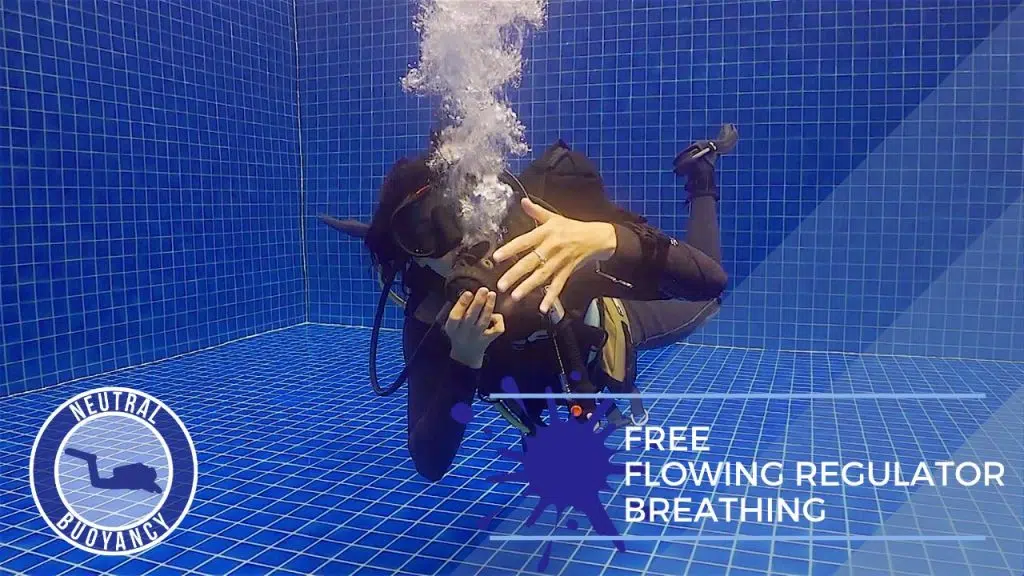
- Free flowing regulator breathing
- Neutral buoyancy, rise and fall – using low pressure inflation
- Five-point ascent
- Controlled Emergency Swimming Ascent
- Orally inflate BCD to hover for at least 60 seconds
- Underwater swim without a mask
- Remove and replace weight system underwater
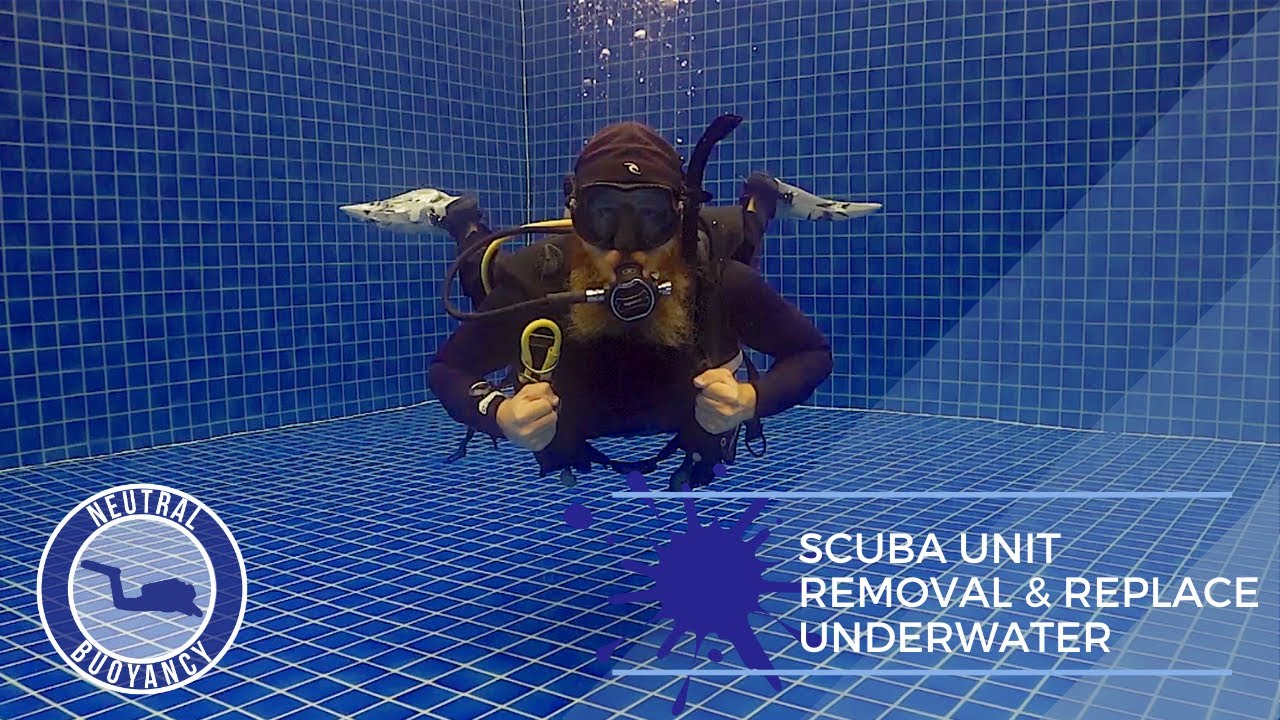
- Remove and replace scuba unit underwater
- Remove and replace scuba unit on the surface
- Remove and replace weight system on the surface
- Head-first surface dive, snorkel out of mouth
- Disconnect low-pressure inflator
- Re-secure a loose cylinder band
- Perform an emergency weight drop
Divemaster Practical Assessments
During Practical Assessments, you will have the opportunity to work with real student divers while assisting on courses with our staff members. The assessments that you will be evaluated on include:
- Practical Assessment 1 — Open Water Diver Students in Confined Water
- Practical Assessment 2 — Open Water Diver Students in Open Water
- Practical Assessment 3 — Continuing Education Student Divers in Open Water
- Practical Assessment 4 — Certified Divers in Open Water
Prior to each assessment, your Divemaster coordinators will sit down with you and go through the evaluation criteria.
We encourage our candidates to assist on as many courses as possible, so you will have plenty of opportunities to be successful in all of your Practical Assessments.
Diving Courses that you can assist on are:
- PADI Open Water Diver Course
- PADI Advanced Open Water Course
- PADI Rescue Diver Course
- PADI Specialty Courses
- EFR CPR & First Aid Training Course
- Discover Scuba Diving experience programs
- Discover Local Diving – AKA “fun diving”
Final Counseling
To wrap up your Divemaster Course, you will sit down with both of your Coordinators during a final counseling session. During this time, we will discuss:
- Professionalism throughout your training
- Overall strengths and weakness
- Next Steps
- Career development and job opportunities
- PADI Pro Website Orientation
- Final Paperwork & the Divemaster Application process
PADI Divemaster Course Koh Tao Schedule
The schedule is personalised, tailored to YOU
- Your timeframe
- Your learning ability
- Your individual needs.
What does the Koh Tao PADI Divemaster Course include?
The schedule is personalised, tailored to YOU
- PADI Divemaster course
- Dive equipment – It’s highly recommended as a PADI Pro you own your own full set of equipment and if you plan on working in the industry after the course it’s an absolute must!
If you would like to purchase equipment when you are here, we can offer you attractive discounts on all major brands if purchasing through our own retail centre.
You will however need to provide the following for the Divemaster course Koh Tao:
- Timepiece
- Compass
- Knife or Diving Tool
- Pocket mask
- Surface Marker Buoy (SMB)
- Whistle
PADI Materials Required
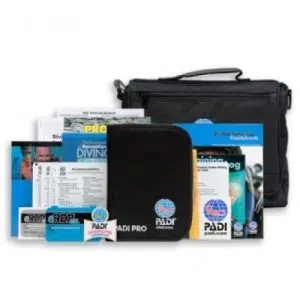
There are PADI educational materials required by standards. You can buy all of these in one pack, the Divemaster Crewpak.
You can buy the PADI Divemaster Course Digital Crewpak & Slate Pak for
- PADI Divemaster Digital Crewpak
- Divemaster e-Learning
- Encyclopedia of Recreational Diving
- Digital Electronic Recreational Dive Planner (e-RDPML)
- ReActivate e-Learning
- PADI Divemaster Slate Crewpak with Pro bag
- PADI Instructor Manual
- Divemaster Slates
- DSD Cue card
PADI Divemaster Application Fee 2026 : $AUD 286
This is your PADI Divemaster Application and first year’s membership fees, paid by the candidate directly to PADI via credit card.
Professional Level Insurance
DiveAssist ScubaMedic Classic (IDEC): – As you will be completing the PADI Koh Tao Divemaster course, you will be making repetitive dives, regularly over several days and several weeks. It is important you have an insurance policy that covers this type of diving.
We include a DiveAssist ScubaMedic Classic (IDEC) Insurance Cover with our all inclusive scuba diving internship programs and insist ALL our Divemaster in training candidates hold a personal diving insurance.
Course Price: 38,000 THB
BOOK ONLINEFrequently Asked Questions
Can I take the PADI Divemaster course on Koh Tao as a beginner?
The prerequisites for the PADI Divemaster course are:
- Certified as a PADI Advanced Open Water Diver
- Certified as a PADI Rescue Diver
- Completed EFR Primary and Secondary Care training within 24 months
- Medically cleared for diving by a physician within 12 months
- 18 years old
- Logged 40 scuba dives to start the course
As a beginner, you will need to gain experience in different areas before enrolling in a Divemaster course. This can easily be done, either before or once you arrive at IDC Koh Tao.
We can easily get you started down the path to becoming a PADI professional and help you come up with a schedule that works best for you.
We offer a variety of Lifestyle packages that are tailored to your previous diving experience.
We also start courses every single day, and complete up to 4-5 dives per day. This will make it extremely easy for you to meet each and every requirement to start your training.
How long does it take to complete the PADI Divemaster course Koh Tao?
The Divemaster course on Koh Tao takes a minimum time of 3 weeks to complete. Several factors will ultimately influence how long your Divemaster course will take you to complete.
These include your pre-requisite dive experience, how intensive you wish your Divemaster training to be and your individual diving ability with regards to meeting all course performance requirements.
PADI courses are performance based rather than time based. This means that you do not have any time restrictions to complete your training.
During your course you will have certain objectives that you will need to meet when it comes to:
- Knowledge Development
- Waterskills Development
- Practical Skills
- Practical Workshops
- Practical Assessments
- Professionalism
Our Divemaster coordinators will help create a schedule that best fits your time frame, which will allow you to achieve mastery in all of these areas.
You will also be able to choose a professional mentor to work with you in your skill and knowledge development.
Can you help me get a visa on Koh Tao to do my PADI Divemaster course?
Once we know how long you wish to stay in Thailand for, we can recommend the visa that would best suit your needs.
There are several options for you. The first option is a Visa on Arrival. This will allow you to stay in the country for 30 days.
If you wish to stay an additional month, you can make a visa extension that will give you an additional 30 days.
Be aware this may not be the case for every single nationality. I would highly recommend contacting your local Thai Embassy or Consulate website to check the latest information relevant to you and your own nationality.
Another option is applying to your Thai consulate or Embassy for a single entry Tourist Visa that will grant you 60 days (2 months). You can also extend this for an additional 30 days once you are here.
We can provide you with any additional documentation that the embassy or consulate may request to confirm your participation in this program.
Can I get involved with conservation when I do the PADI Divemaster course Koh Tao?
Integrated within all our Diving Lifestyle programs is our Marine conservation module.
Throughout the Divemaster program, all of our candidates will receive the opportunity to participate in a range of conservation activities. Some of the projects and activities you can participate in include:
- Drupella snail collection
- Dive Against Debris reef clean-up dives
- Coral Watch and Discover Reef Check
- Cigarette Butt clean-up challenges
- Coral Restoration
You can also get involved with Clam Nursery Research, Coral Nursery Building and the opportunity to contribute to our very own artificial reef. We recommend getting involved as much as you can.
Can I take my Dive Instructor course straight after the PADI Divemaster Koh Tao?
This is a great question and there is not one answer to it. We do our best to always focus on each individual candidate and come up with an answer that is tailored to them.
During your training with us you will be working directly with our Pro level Team who also focus on Instructor Development.
This will allow you to make a smooth transition into your Instructor Development Course (IDC).
It is extremely helpful to complete the Instructor training while everything is fresh, as the IDC builds off our Divemaster Course.
If you decide you would prefer to wait, we also offer a 9-day Working Internship, which is a perfect opportunity to prepare you to work in the industry as a Divemaster.
Working alongside our Divemaster team, you will gain experience in dive guiding, conducting programs dealing with certified divers and handling the logistics associated with a busy dive center.
You can participate in this program before or after your IDC.
What does the PADI Divemaster course Koh Tao consist of?
The Divemaster course on Koh Tao consists of a number of different modules, each with specific performance requirements that must be met prior to certification.
These modules include:
- Knowledge Development
This section includes reading the Divemaster manual and completing the 9 knowledge reviews on a range of subjects.
These subjects include background theory for the practical modules such as assisting with student divers in training, supervising certified divers and divemaster conducted programs.
Other diving related subjects include risk management, the business of diving and marketing diving.
The knowledge development also includes a range of dive theory subjects, along with a two part Divemaster exam that you must complete.
- Water Skills Development
This section focuses on your individual water skills and includes swim and stamina tests such as a 400 metre freestyle swim, 800 metre snorkel swim with fins, a 100 metre tired diver tow in full scuba and a 15-minute float.
The water skills development also includes a rescue assessment, similar to what you mastered on your rescue course and an underwater equipment exchange with a buddy.
During the water skill development section, you are also required to learn how to demonstrate the 24 basic skills from the Open water course to professional level demonstration quality. Don’t worry you will get lots of practice.
- Practical Application
During this section of your Divemaster course you are required to complete a number of practical skills. They are Dive Site Set Up and Management, complete a map of a dive site, dive briefing workshop and a search and recovery workshop plus deep dive scenario.
- Divemaster Conducted Programs Workshops
These workshops focus on the programs you can conduct as a certified Divemaster. These workshops include Reactivate, skin diver and supervising snorkeling, Discover scuba diving and Discover Local diving.
- Practical Assessments
The final section is the practical assessments that include assisting with open water diver training, assisting Dive Instructors with continuing education students and assisting with certified divers.
Throughout the course you are evaluated on your professionalism and by the end of the Divemaster course you must also have:
Logged at least 60 scuba dives including experience in night diving, deep diving and underwater navigation and completed EFR Primary and Secondary Care training within 24 months.
How deep can a Divemaster on Koh Tao dive?
A certified Divemaster can dive to 30 metres. The maximum depth limit within the PADI system is 40 metres, which requires Deep Diver training.
If you wish to dive deeper than 40 metres you will need to complete technical dive training.
Can a Divemaster on Koh Tao teach courses?
As an active status PADI Divemaster you are also certified to independently teach & certify skin divers, including the PADI Seal Team aqua mission skin diver specialist and conduct discover snorkeling programs.
You are also authorized to supervise scuba diving activities involving certified divers. These activities include Discover Local Diving and the Reactivate program.
You are also a certified assistant and can assist an active teaching PADI Instructor with PADI diver level training include Open water, advanced and discover scuba diving.
However, to independently teach the rest of the PADI courses, you must complete a PADI Instructor Development Course and become a PADI Instructor.
How much do Divemasters make a year on Koh Tao?
Working for a relatively busy Koh Tao dive centre during high season can easily see a Divemaster earning 40,000 to 60,000 baht per month, but this varies considerably depending on the dive centre and also the season.
Divemaster pay often consists of a flat salary plus commissions paid on a variety of activities.
This can include the number of divers you guide, the number of reactivate / scuba reviews you conduct, revenues generated from equipment and continuing education sales and incentives for other sales and especially marketing based duties.
Where is the best location to take PADI Divemaster course?
Koh Tao in Thailand is commonly accepted to be one of the best locations due to its all year round warm climate and warm sea temperatures.
The tropical island is the perfect diver training location with around 30 dive sites, 8 kilometres of Coral Reef surrounding the coastline and very high standards of diver training.
With so many dive centres and student divers being certified, Divemaster candidates gain a tremendous amount of experience including real world experience in the many marine Conservation initiatives taking place.
Aside from the diving, Koh Tao offers potential Divemaster candidates a wide range of alternative activities to enjoy that include exploring the island, superb food and drink venues and excellent nightlife.
With an abundance of pro level scuba diver training centres located around the world, the ultimate choice will depend on the personal circumstances of each individual.
HOW TO FIND US
IDC KOH TAO
9/94 Moo 2,
Mae Haad,
Koh Tao, Surat Thani
84360 Thailand
Email: [email protected]
Tel: +66987044736